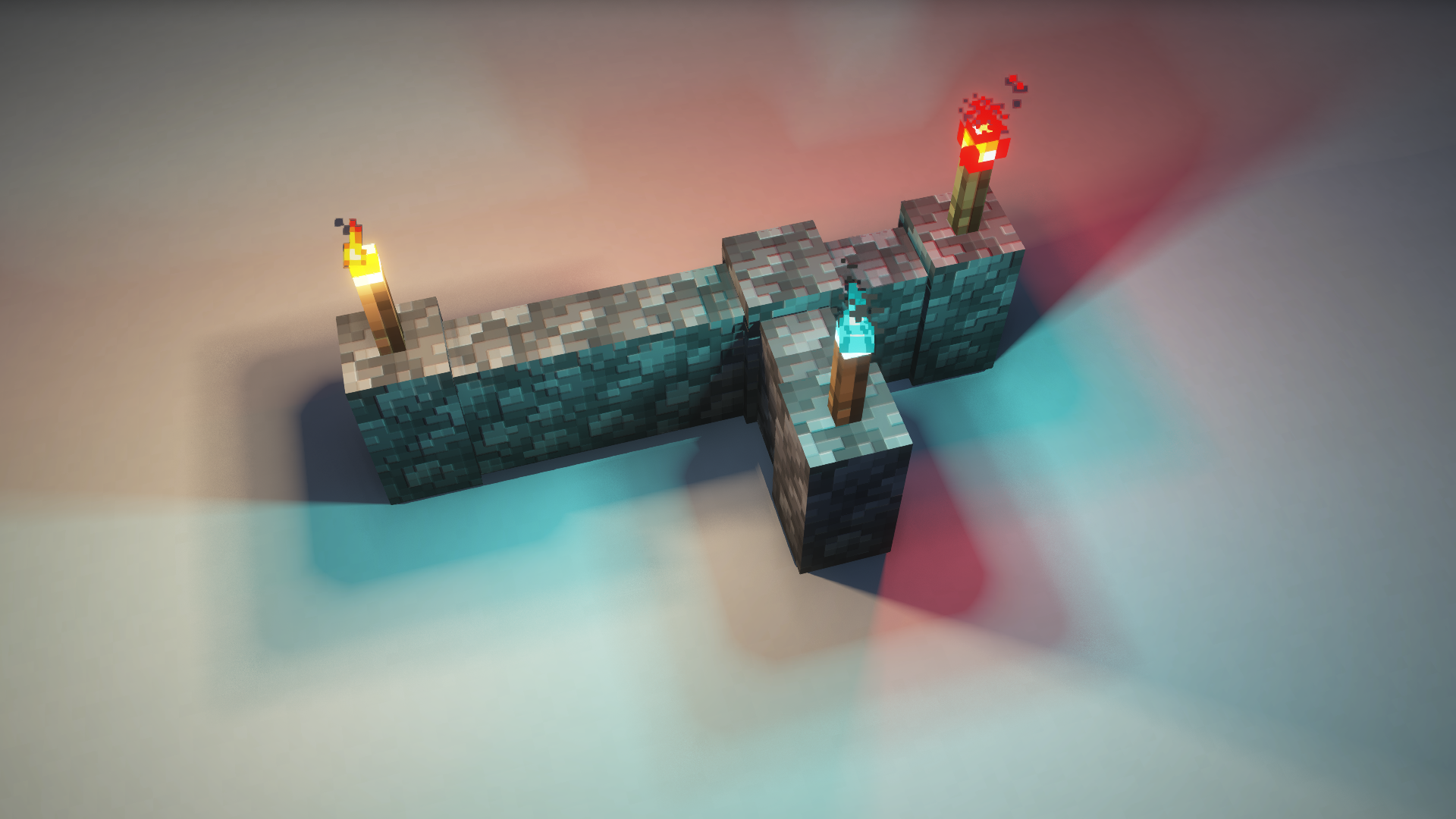
Shaders in Minecraft usually try to do one of two things. Either they polish what already exists, or they push the game toward realism by stacking effects on top of each other. Rethinking Voxels takes a different path. It does not try to imitate real life lighting in a cinematic way, and it does not try to stay safely close to vanilla either. Instead, it questions how light itself should behave in a block-based world.
This shader feels more like an experiment than a visual preset. It asks a simple question. If Minecraft is built out of voxels, why should lighting behave like smooth surfaces instead of blocks? That question defines everything about Rethinking Voxels and makes it one of the most interesting shader projects available right now.
What Rethinking Voxels Is
Rethinking Voxels is a voxel-based global illumination shader for Minecraft Java Edition. Unlike traditional shaders that rely mostly on screen-space lighting tricks, this shader uses a voxel representation of the world to calculate light bounce, color bleeding, and indirect lighting.
In simpler terms, light actually exists inside a 3D grid that mirrors Minecraft’s block structure. When light hits a block, it spreads into nearby space in a way that feels physically grounded but still block-aware. This makes interiors brighter in a natural way, caves feel more readable, and colored blocks influence nearby lighting without relying on fake overlays.
The shader is built for Iris and works best alongside modern rendering mods like Sodium. It is still actively developed and considered experimental, which is important to understand before jumping in.
Visual Style and Atmosphere
The first thing you notice when using Rethinking Voxels is how calm everything feels. There is no aggressive bloom, no over-sharpened colors, and no dramatic filters trying to grab your attention. The world feels evenly lit, grounded, and believable within Minecraft’s own logic.
Sunlight behaves more realistically indoors. Light spills through windows and doorways instead of stopping abruptly. Underground builds benefit the most, as caves and bases are softly illuminated by nearby light sources rather than falling into harsh darkness.
Color bleeding is subtle but effective. Wooden interiors feel warmer. Stone-heavy rooms feel cooler. This happens naturally through voxel light propagation instead of forced color grading.
Atmosphere in this shader is quiet and thoughtful. It does not try to be cinematic. It tries to be correct in its own system.
Performance and System Requirements
This is not a lightweight shader.
Rethinking Voxels relies on voxel-based global illumination, which is computationally expensive. Even with Sodium and Iris, you should expect a noticeable performance cost compared to traditional shaders like BSL or Complementary.
A dedicated GPU is strongly recommended. Mid-range GPUs can run it at playable frame rates with tuned settings, but low-end systems will struggle. Integrated graphics are generally not suitable for this shader.
The good news is that performance scales reasonably with settings. Reducing voxel resolution and limiting bounce calculations can significantly improve FPS while keeping the core look intact.
This shader rewards experimentation. You will likely spend time adjusting settings to find a balance that works for your system.
Who This Shader Is For
Rethinking Voxels is for players who care about lighting behavior more than flashy effects.
If you enjoy technical shaders, experimental rendering techniques, or just want to see Minecraft lit in a way that actually respects its block structure, this shader is worth your time. Builders who focus on interiors and underground spaces will especially appreciate what it offers.
This shader is not ideal for fast-paced gameplay, PvP, or casual play sessions. It is also not meant for players looking for instant visual impact or easy performance.
Think of it as a shader for people who enjoy understanding how things work.
Rethinking Voxels was released on January 8, 2023 and is compatible with these Minecraft versions: 26.2 – 26.1.2 – 26.1.1 – 26.1 – 1.21.11 – 1.21.10 – 1.21.9 – 1.21.8 – 1.21.7 – 1.21.6 – 1.21.5 – 1.21.4 – 1.21.3 – 1.21.2 – 1.21.1 – 1.21 – 1.20.6 – 1.20.5 – 1.20.4 – 1.20.3 – 1.20.2 – 1.20.1 – 1.20 – 1.19.4 – 1.19.3 – 1.19.2 – 1.19.1 – 1.19
Screenshots Section
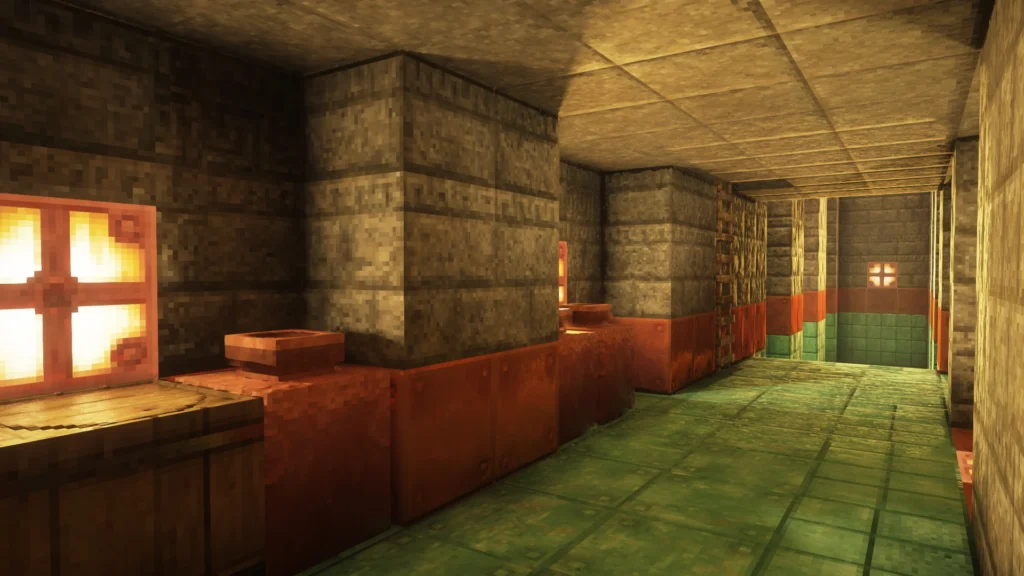
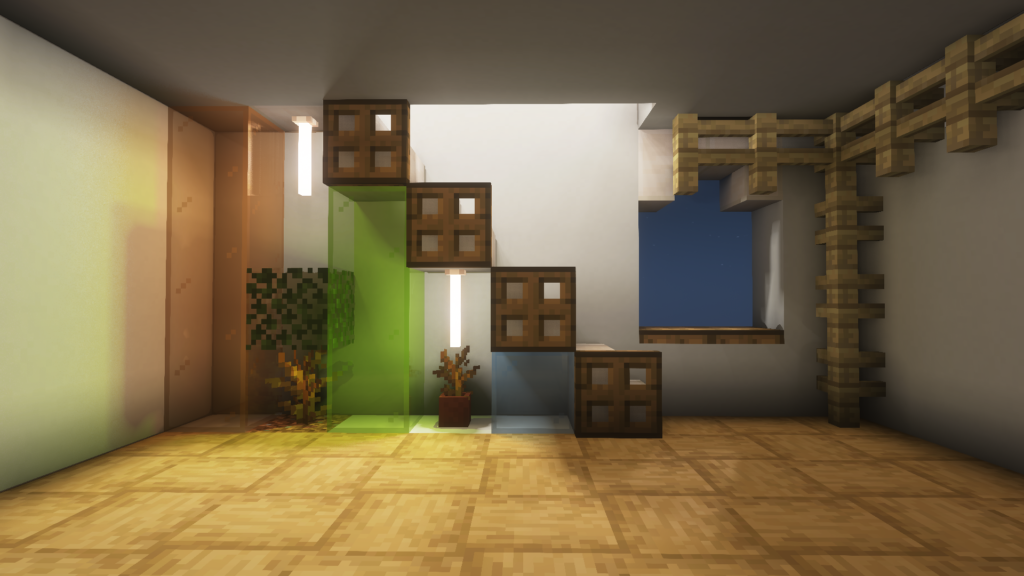
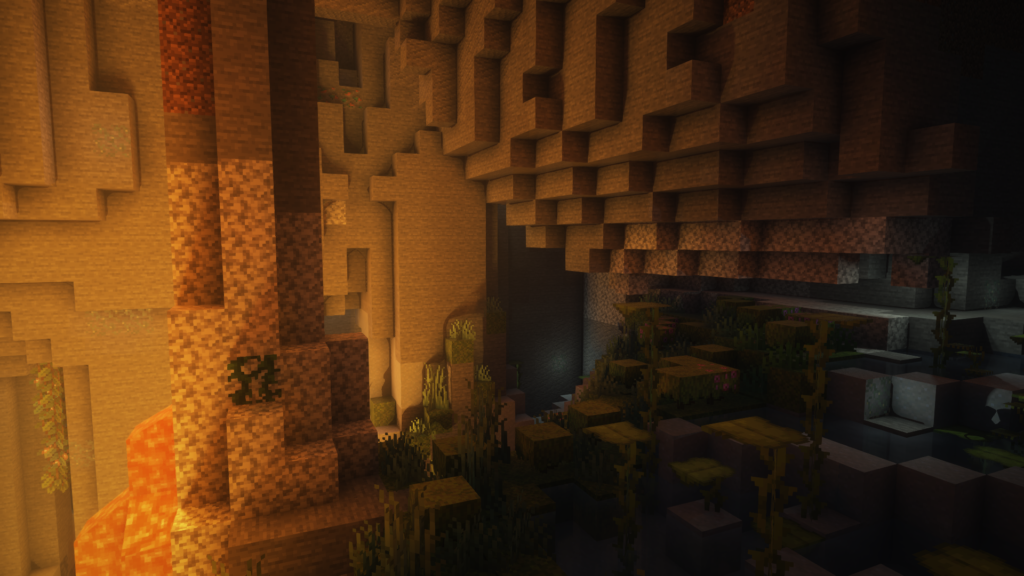
Screenshots with Rethinking Voxels should focus on lighting interactions rather than landscapes.
Interior builds with windows are perfect to show how sunlight enters and spreads naturally. Underground bases highlight the strength of voxel lighting, especially around torches, lanterns, and glow blocks.
Caves with mixed materials demonstrate subtle color bleeding and soft shadow transitions. Screenshots should avoid heavy post-processing and instead let the lighting speak for itself.
This shader looks best when you slow down and observe how light fills space.
My Personal Take on Rethinking Voxels
Rethinking Voxels feels less like a shader I turn on for fun and more like a shader I study.
Using it makes me notice how badly most shaders fake lighting. Once you see voxel-based global illumination working properly, it is hard to unsee the shortcuts used elsewhere. Interiors feel honest. Darkness feels intentional instead of artificial.
That said, this is not a shader I would use every day. It demands performance, patience, and tweaking. Sometimes I miss the simplicity of softer shaders that just work out of the box.
Where Rethinking Voxels fits for me is experimentation and learning. When I want to build underground, test lighting layouts, or just experience Minecraft in a more physically consistent way, this shader becomes incredibly satisfying.
Some players will love it. Others will find it too demanding or too subtle. Both reactions are valid.
Download and Credits
You can download Rethinking Voxels from its official Modrinth page:
Java Edition:
[26.x – 1.21.x] [Iris] Download Rethinking Voxels Shaders
[1.20.x – 1.19.x] [Iris] Download Rethinking Voxels Shaders
[1.19.x] [OptiFine] Download Rethinking Voxels Shaders
All credit goes to the original creator and contributors of the Rethinking Voxels shader project. This shader is actively developed and may change significantly over time, so always check the official page for updates and compatibility notes.
Disclaimer
We did not create this shader pack. Rethinking Voxels is developed and maintained by its original creator. This article is based on hands-on experience and publicly available information, and it is intended for informational purposes only.